

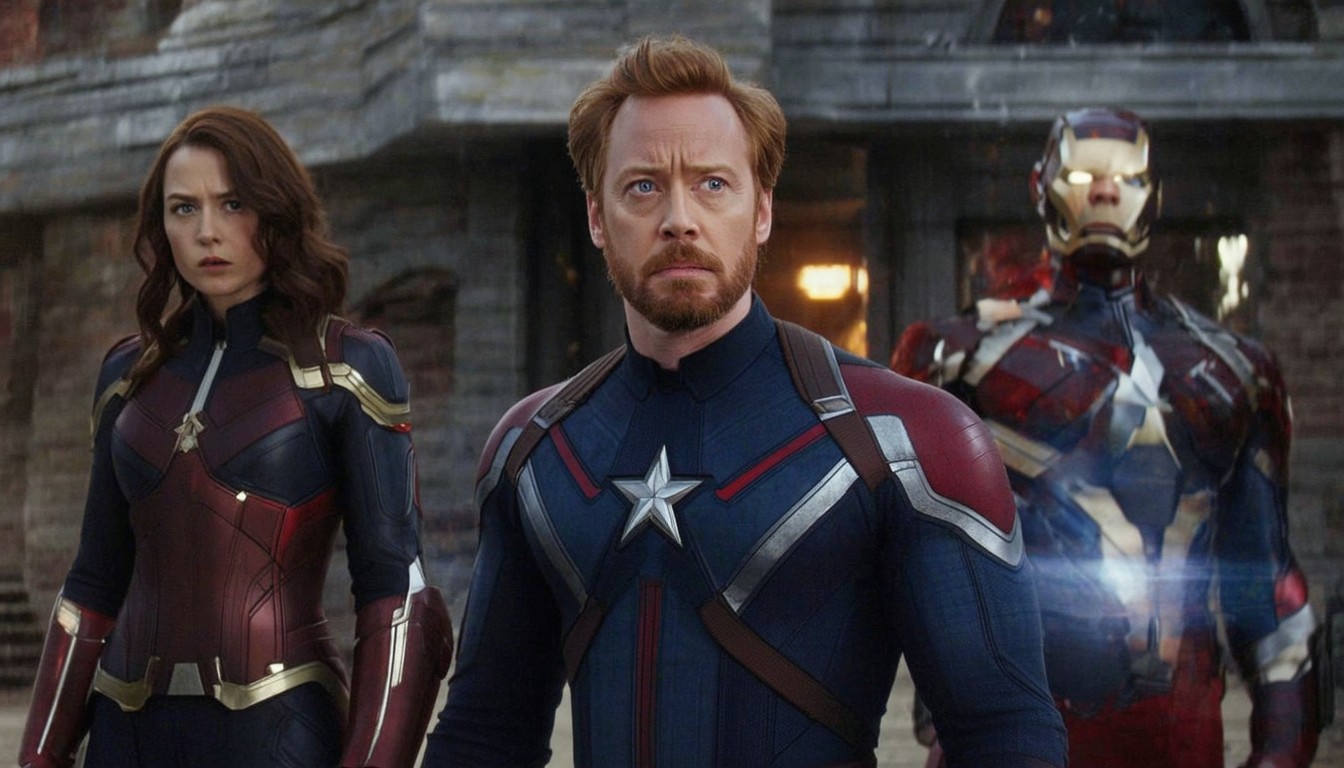
Marvel Studios has turned post-credit sequences into must-see moments—a storytelling device as beloved as it is dissected. With “The Marvels,” audiences were quick to speculate on hidden clues and greater universe connections. The film’s post credit scene delivers on that anticipation, blending classic Marvel fan service with concrete signals about where the Marvel Cinematic Universe (MCU) might be headed next.
Spotlight on the Scene: What Actually Happens
Though Marvel has made a tradition of weaving humor and teasers into post-credit scenes, “The Marvels” uses its bonus moment to artfully set building blocks for future films while rewarding dedicated fans. In this scene, Monica Rambeau awakens in a hospital bed—clearly not in the universe she knows. Over her bed stands a recognizable face for comic readers and X-Men fans: a version of her mother, Maria Rambeau, but with a new superhero identity.
This variant Maria sports the white hair and uniform of Binary, a fan-favorite from Marvel’s comic lore. To complicate matters, Monica also meets Dr. Hank McCoy—better known as Beast—marking the character’s first true appearance in the MCU and a direct nod to the X-Men.
The Beast cameo is more than Easter egg; it hints at universe-jumping consequences stemming from Monica’s actions during the movie. Notably, Marvel chooses a classic X-Men voice and look, echoing the animated series and older Fox films. This approach, as Disney gradually integrates mutants into the MCU after reacquiring the rights from Fox, sends a clear message: The X-Men are coming.
Key Reveals: Mutants and the MCU Multiverse
Beyond the surface, this scene is laden with strategic signals:
- Mutant Debut: Beast’s inclusion is Marvel’s boldest step to date in merging the X-Men universe with the MCU. Previous nods—like Kamala Khan’s musical cue in Ms. Marvel or WandaVision’s casting surprise—pale compared to a full-fledged X-Man speaking on camera.
- Multiversal Shifts: Monica’s predicament is confirmation that multiverse logic, seeded since “Loki” and “Spider-Man: No Way Home,” is accelerating. Heroes and villains can now cross worlds, with direct implications for future blockbusters.
- Emotional Resonance: Monica’s reunion with her mother—though in a different form—pays off emotional threads woven throughout the film and “WandaVision.” It underscores the personal stakes involved in universe-hopping, rather than mere spectacle.
“The introduction of the X-Men in the MCU has been a long-awaited milestone, and Beast’s appearance in ‘The Marvels’ is as much a promise as it is a tease for what’s coming,” says comic book historian Dr. Lena Carver.
Contextualizing the Easter Eggs: What Fans Noticed
Marvel’s post-credit scenes thrive on the details. “The Marvels” is no exception. Viewers attuned to Marvel’s storytelling devices caught several important nuggets:
- Binary and Deep Comics Cuts: Binary, played by Lashana Lynch, has roots in classic X-Men storylines. Her appearance, while not directly the Carol Danvers variant from the comics, still signals Marvel’s interest in deeper lore.
- Beast’s Characterization: Voiced by Kelsey Grammer, who played the role in the Fox films, Beast sports a design reminiscent of both comic and animated incarnations—a careful blend, likely intended to reassure long-time fans.
- Medical Tech and Hints of Xavier’s School: Monica wakes up amid futuristic technology and glass windows stenciled with the unmistakable “X” motif. This room isn’t just a hospital—it subtly channels the infirmary within the X-Men’s mansion.
Even the choice of dialogue, laced with terms like “multiversal rifts,” cements the MCU’s pivot into fully embracing comic book multiverse mechanics.
Strategic Implications for Future MCU Phases
The post credit scene from “The Marvels” isn’t just a game of Easter eggs—it’s a move with serious narrative consequences. Marvel has used these scenes to sow seeds for future movies, and this is perhaps their boldest yet.
With the upcoming “Avengers: Secret Wars,” rumored to feature multiversal combat and world-colliding stakes, the pieces are falling into place:
- Mutants can now be seamlessly introduced, shifting the MCU’s power dynamics and storylines.
- Crossovers that once required licensing negotiations (such as Spider-Man’s appearance) are now fair game, thanks to a unified Disney-controlled universe.
- Future titles may freely pluck characters from different universes, revitalizing dormant franchises or resurrecting fan favorites.
Industry trends suggest that audiences crave the kind of interconnectivity that only Marvel currently delivers at this scale. As superhero fatigue becomes a talking point in entertainment media, Marvel’s willingness to introduce beloved characters from separate film universes is likely a retention play for aging fans and a draw for new viewers.
A Delicate Balancing Act: Emotional Stories Amid Expanding Lore
Amid all the spectacle, character growth remains central. Monica’s arc, spanning grief, heroism, and sacrifice, is reflected in her confrontation with another version of her mother. Audience reactions often hinge on emotional authenticity, not just surprise cameos. Marvel, attentive to feedback from projects like “WandaVision” and the critical success of films like “Black Panther,” is increasingly layering personal stakes into its tentpole moments.
This scene from “The Marvels” achieves two goals: it hints at an incoming wave of fantastical characters and universes, while grounding its impact in individual loss and connection.
Conclusion: Laying the Foundation for Marvel’s Next Era
The “Marvels” post credit scene marks a significant narrative turning point; it signals that the MCU is truly ready to embrace its mutant and multiversal potential. By carefully blending nostalgia, comic book accuracy, and strong character moments, Marvel Studios ensures this tease is more than simple fan service—it’s a foundational step toward the next chapter. For fans and newcomers alike, the signals are clear: expect bolder storytelling, legacy crossovers, and surprises that will define superhero cinema’s foreseeable future.
FAQs
What happens in “The Marvels” post credit scene?
Monica Rambeau finds herself in a new universe’s hospital, greeted by a version of her mother as Binary and by Beast, a key X-Men member. This scene confirms the MCU’s commitment to introducing mutants and embracing the multiverse concept.
Why is Beast’s appearance significant?
Beast is the first major X-Men character to appear directly in the MCU, bridging the gap between Marvel’s established universe and prior X-Men storylines. His cameo signals the beginning of deeper mutant integration across future MCU projects.
How does this scene connect to Marvel’s multiverse narrative?
Monica’s presence in a different reality demonstrates that characters can now move between universes. The scene underscores Marvel’s intent to build stories involving universe-jumping, leading into events like “Avengers: Secret Wars.”
Will more X-Men characters appear soon in the MCU?
While Marvel hasn’t officially confirmed which X-Men will debut next, this scene strongly hints at further mutant introductions. Several upcoming projects are likely to leverage these connections to expand the universe.
What is the significance of Maria Rambeau as Binary?
Maria appearing as Binary draws from X-Men comic lore and teases deeper connections between the MCU and the mutant side of Marvel’s universe. It also offers an emotional payoff for Monica, highlighting personal consequences of multiversal travel.
Are there other hidden Easter eggs in the scene?
Keen-eyed fans noticed elements like the “X” insignia, advanced medical tech, and subtle nods to the X-Men’s school, all building anticipation for a wider mutant presence in upcoming Marvel phases.














Leave a comment