

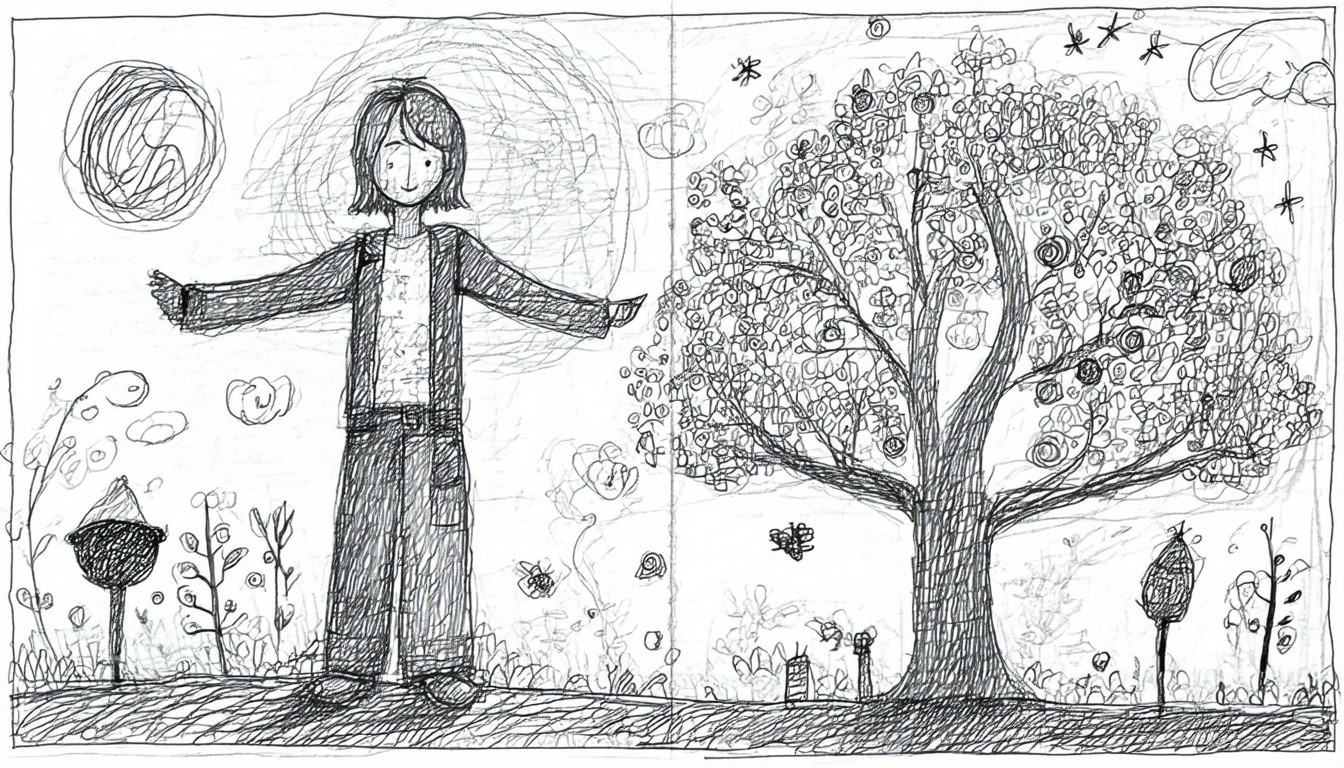
The concept of “my doodle” has evolved far beyond idle scribbles on a notepad during meetings or lectures. Today, doodling is recognized as a vibrant form of creative expression that bridges artistic freedom with mindfulness, cognitive benefits, and even innovative thinking. Whether found in the margins of a notebook, digital sketchpads, or shared as social media content, doodle art carries significance both as personal self-expression and as a widely celebrated visual culture trend.
Understanding how and why people doodle—alongside discovering new and engaging drawing ideas—can lead to fresh bursts of creativity. Many educators, psychologists, and professional artists champion doodling not only for its artistic merits but also for its positive impact on focus, relaxation, and problem-solving.
The Modern Meaning of “My Doodle”: More Than Just Scribbles
At its heart, a doodle is a simple, spontaneous drawing made without much pre-planning. However, what constitutes “my doodle” today benefits from new contexts:
- Personal Expression: Creating small drawings that reflect moods, stories, or fleeting observations.
- Creative Exercise: Using doodling as a warm-up or brainstorming tool.
- Digital Platforms: Sharing unique artwork under hashtags like #mydoodle on platforms such as Instagram, allowing connection with global creative communities.
Recent studies underscore the surprising power of doodling. According to research from the University of Plymouth, people who doodle while listening to information retain nearly 30% more of that information than those who do not. This illustrates doodling’s role in enhancing memory and engagement, especially relevant in classroom and workplace settings.
Benefits of Doodling: Cognitive, Emotional, and Artistic Upsides
For many brands and individuals, doodling serves as a catalyst for creativity and well-being. Unpacking the multifaceted benefits reveals why the practice has gained prestige:
Cognitive Enhancements
Doodling can:
- sharpen focus during complex tasks,
- facilitate better absorption of information,
- and foster creative problem-solving.
Professional designers often turn to “my doodle” moments as a springboard for innovation, letting the subconscious mind explore ideas without constraints.
Emotional and Therapeutic Value
Doodling offers an accessible, low-pressure outlet for managing stress and unwinding. Mental health advocates increasingly recommend visual journaling and doodle-based prompts as daily tools for self-care.
“When we doodle, we engage our mind in a relaxed yet attentive state, opening doors for subconscious thought and emotional processing,” says Dr. Julia Cameron, creativity researcher and author.
Artistic Exploration
From cartoon-style sketches to intricate mandalas, doodles cover a spectrum of forms and styles—often serving as the genesis for more elaborate artworks. Many renowned illustrators, such as Jon Burgerman and Gemma Correll, began their careers by sharing their casual doodles online, eventually transforming improvised marks into distinct artistic brands.
Fun Drawing Ideas: Where to Start with “My Doodle”
Getting started with creative doodling doesn’t require formal training or expensive gear. A pen, paper, and a willingness to experiment are more than enough. For those seeking inspiration, consider these approachable strategies:
One-Line Doodles
Try drawing an object or character without lifting your pen from the paper. This one-continuous-line approach challenges you to see forms differently and emphasizes flow over perfection.
Themed Doodling Challenges
Engage in 30-day doodle challenges based on prompts like “animals,” “weather,” or “urban scenes.” These community-driven trends are easily found on platforms like Pinterest or Reddit and help keep creativity consistent.
Pattern-Based Exploration
Fill a page with repeated geometric shapes, whimsical faces, or botanical motifs. Pattern doodling encourages relaxation and often leads to organically emerging designs.
Adding Color and Texture
Experiment with watercolor highlights, colored markers, or digital tools to bring doodles to life. Layering textures and hues can transform a basic outline into a captivating mini artwork.
Digital Platforms and Social Sharing: Connecting Through “My Doodle”
Doodling has undergone a digital renaissance, thanks to the proliferation of drawing apps and social platforms. Tools like Procreate, Adobe Fresco, and the native Notes app on tablets make it easier than ever to start doodling and instantly share art with a global audience.
Building Community and Gaining Feedback
Posting under hashtags such as #mydoodle or participating in dedicated doodle groups can yield constructive feedback, inspiration, and friendships. Many well-established online communities organize themed events, tutorials, and live drawing sessions, helping both beginners and experienced artists stay motivated.
In practice, many teachers and creative facilitators use shared digital whiteboards to co-create doodles in real time with their students, reinforcing learning and breaking the monotony of virtual lessons.
Doodle Art in Popular Culture and Professional Spaces
Beyond personal use, doodle art now features prominently in branding, product design, advertising, and even corporate culture.
Brand Collaborations and Product Design
Companies ranging from Google (famous for its ever-changing homepage doodles) to boutique stationary brands employ doodle-style graphics to evoke playfulness and inclusivity. Commissioned doodle illustrations have adorned product packaging, clothing lines, and book covers, further blurring the lines between casual art and commercial design.
Corporate Creativity Boosters
Some organizations encourage employees to doodle during brainstorming meetings, recognizing the value of visual note-taking in uncovering novel solutions. Techniques such as mind mapping and visual SWOT analyses often incorporate doodle elements to aid in information processing and engagement.
“Fostering an environment where sketching and doodling is welcomed can lead to unexpected breakthroughs—sometimes, the next big idea starts as a simple doodle on the corner of a page,” explains Emily Chen, innovation strategist at a leading tech incubator.
Conclusion: Embracing the Power of “My Doodle” for Everyday Creativity
Doodling is more than an idle pastime—it’s an invitation to explore, experiment, and engage with one’s thoughts visually. Whether for stress relief, cognitive enhancement, or the joy of artistic expression, “my doodle” can become a daily practice that enriches both personal and professional life. With growing acceptance in education, corporate culture, and digital art communities, now is an ideal time to embrace doodling as both a mindful habit and a launching pad for creativity.
FAQs
What is the benefit of doodling regularly?
Doodling has been shown to boost focus, enhance memory retention, and reduce stress. Regular practice can also help unlock creative thinking in professional and academic settings.
Can anyone start doodling, or do you need artistic skills?
Absolutely anyone can start doodling, regardless of prior artistic experience. Doodling celebrates spontaneity and imperfection, making it accessible to beginners and seasoned artists alike.
How can I find inspiration for my doodle art?
Drawing prompts, themed challenges, and observing everyday objects are all popular sources of inspiration. Online communities and platforms like Pinterest or Instagram provide abundant creative ideas as well.
Are there therapeutic benefits to doodling?
Yes, many people find that doodling offers mindfulness benefits and emotional release. It can serve as a gentle pathway to relaxation and self-reflection.
Which digital tools are recommended for doodling?
Popular digital drawing apps include Procreate, Adobe Fresco, and even simple tools like the iPad Notes app. These offer user-friendly features to experiment and share creations online.















Leave a comment