

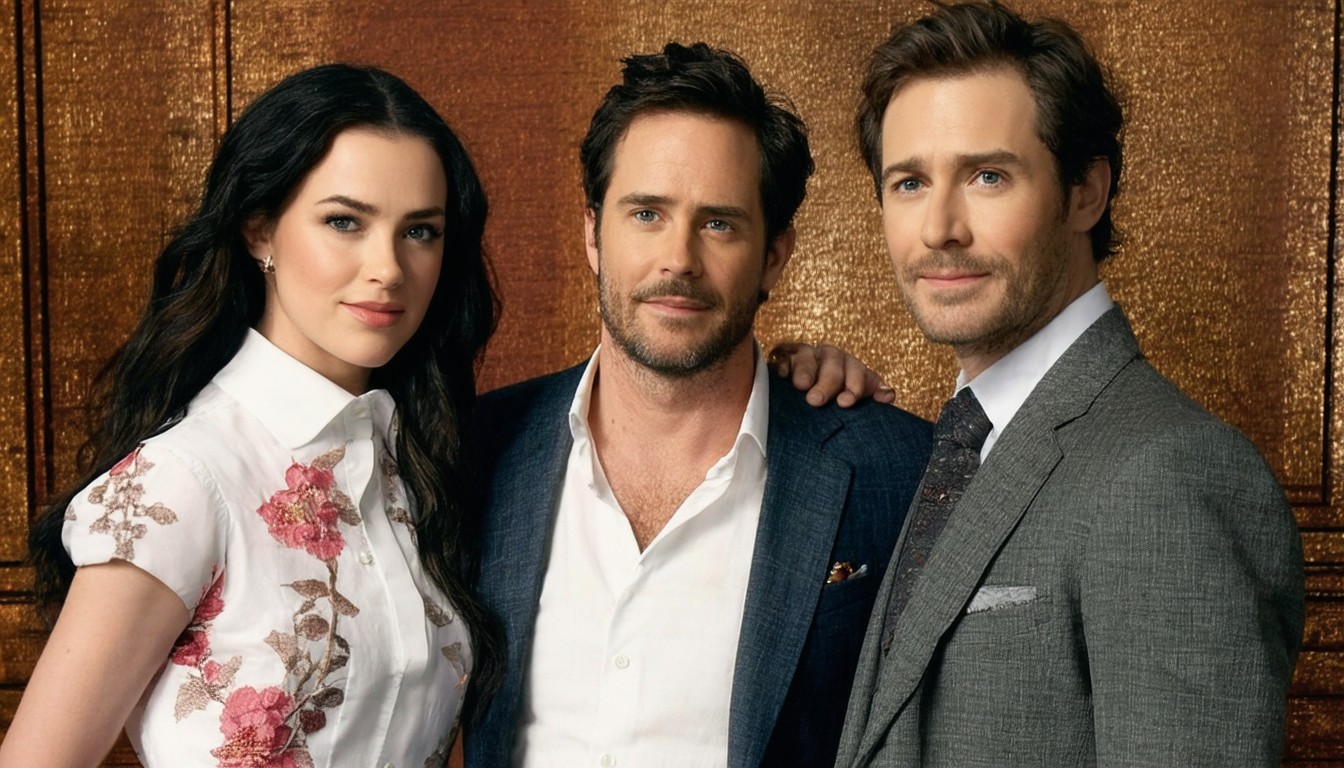
Adapted from Rumaan Alam’s best-selling novel, “Leave the World Behind” is a psychological thriller that hinges as much on its intimate performances as its apocalyptic narrative. Released globally on Netflix, the film quickly became a topic of conversation—not just for its chilling story, but for its powerhouse ensemble cast. Directed by Sam Esmail (best known for “Mr. Robot”), the movie relies on a select group of actors to transport viewers into an unsettling, claustrophobic world. Each character’s nuanced role within the storyline is a masterclass in tension, uncertainty, and interwoven motives.
The casting process, often a critical predictor of a film’s resonance, brought together Hollywood veterans and rising talents, all with proven records of immersing audiences in complex emotional terrain. As viewing habits evolve and streaming platforms compete for audience attention, star-driven casts like this one often serve as both a creative and strategic advantage.
Core Cast: An Overview of “Leave the World Behind” Actors and Characters
Julia Roberts as Amanda Sandford
Taking on the role of Amanda Sandford, Julia Roberts delivers a performance anchored in both maternal protectiveness and fraying nerves. Amanda, a Brooklynite seeking escape in a remote Long Island rental, finds her getaway upended by inexplicable events.
Roberts, an Oscar winner with decades of box office draws, brings instinctive gravitas and relatability. Her portrayal grounds the film’s surreal developments in palpable realism. This marks a return to thrillers for Roberts, whose range across genres—from “Erin Brockovich” to “Homecoming”—remains rare among her peers.
Mahershala Ali as G.H. Scott
Two-time Academy Award winner Mahershala Ali plays G.H. Scott, the enigmatic owner of the vacation house. When he arrives late at night with his daughter Ruth, seeking refuge from an unfolding crisis in New York, he instantly complicates Amanda’s illusion of safety.
Ali’s layered performance invites viewers to question motives and trust. His characters, from “Moonlight” to “True Detective,” are consistently propelled by quiet intensity—a trait he brings here to mesmerizing effect.
“When you assemble a cast of this caliber, they elevate every line, every glance. The tension in ‘Leave the World Behind’ comes as much from what’s unsaid as what is spoken.”
— Odessa Young, film critic, in an interview with IndieWire
Ethan Hawke as Clay Sandford
As Amanda’s husband Clay, Ethan Hawke offers understated vulnerability. Clay is equal parts skeptic and protector, struggling to process the threat both outside the house and within his marriage. Known for his nuanced work in films like “Before Sunrise” and “First Reformed,” Hawke’s subtlety adds texture to scenes heavy with subtext.
Myha’la Herrold as Ruth Scott
Portraying G.H.’s daughter Ruth, Myha’la Herrold commands attention with a blend of resilience and teenage anxiety. The dynamic between Ruth and the Sandford children mirrors the broader themes of class, race, and trust. Herrold, best known for “Industry,” brings generational perspective to the cast and signals a new wave of talent emerging in genre film.
Supporting Cast: Behind the Core Ensemble
- Farrah Mackenzie as Rose Sandford: The youngest Sandford, Rose, gives the film its emotional stakes as panic and confusion intensify. Mackenzie’s understated performance adds authenticity to the family dynamic.
- Charlie Evans as Archie Sandford: As Amanda and Clay’s son, Evans contributes both skepticism and a child’s vulnerability as the outside world unravels.
Unlike epic disaster films with sprawling casts, “Leave the World Behind” keeps its ensemble tight, amplifying the psychological tension and thematic depth.
Why the Cast Resonates: Real-World Impacts and Trends in Streaming Cinema
The casting of “Leave the World Behind” reflects a broader shift in streaming originals, where high-profile actors signal both prestige and audience draw. Netflix, in particular, has leveraged star-driven projects (“The Irishman,” “Marriage Story”) to differentiate its originals and command award season attention.
Recent studies by Parrot Analytics and Nielsen indicate that films with Oscar-winning leads often see significantly higher initial viewership on streaming platforms. Beyond numbers, audiences report deeper engagement—willingness to finish films to the end—when familiar or acclaimed actors are involved.
The film’s ensemble also underscores evolving conversations about representation. By pairing veterans like Roberts and Ali with rising talent such as Herrold, “Leave the World Behind” reflects Hollywood’s ongoing attempts to balance box office tradition with cultural progression.
Mini Case Study: Casting as Narrative Strategy
In practice, films that restrict the cast to a small group—especially in high-stakes, contained thrillers—channel the energy into relationship dynamics rather than spectacle. Echoes can be found in “The Invitation” and “10 Cloverfield Lane,” both celebrated for their tightly wound ensemble performances.
The success here is instructive: well-selected casts are central to the viewer’s ability to suspend disbelief, empathize, and linger on moral ambiguities long after the credits roll.
The Characters: Motivations and On-Screen Chemistry
Amanda and Clay: Marriage Under Pressure
The Sandfords’ marriage is a crucial focal point. As their vacation derails, old fault lines resurface. Roberts and Hawke lean into the reality of a couple confronting both existential uncertainty and domestic routine.
G.H. and Ruth: Strangers, Hosts, and Intruders
The arrival of G.H. and Ruth reverses the family’s assumptions about safety and ownership. Ruth, trapped between adolescence and emerging adulthood, battles both her circumstances and the Sandfords’ suspicion. Their interactions—sometimes tense, sometimes collaborative—embody the story’s exploration of trust in the face of crisis.
Children in Chaos
Farrah Mackenzie and Charlie Evans, as Rose and Archie, represent innocence lost. Their responses, ranging from confusion to small acts of courage, amplify the stakes and ground the narrative’s more surreal elements.
Conclusion: The Enduring Power of Exceptional Casting
“Leave the World Behind” stands as a testament to the transformative power of casting. By assembling a compact yet formidable cast, the film achieves a blend of suspense, empathy, and introspection rarely matched in recent thrillers. Industry trends, audience reception, and the film’s long afterglow confirm what insiders have long known: casting is not just a creative decision; it’s a strategic one.
For viewers, the film’s performances promise not only a cinematic experience but a reminder of the emotional depth that only the right actors can invoke. For creators and studio heads, it’s a lesson in the continued importance of thoughtful ensemble selection—especially as streaming reshapes Hollywood’s old rules.
FAQs
Who plays Amanda Sandford in “Leave the World Behind”?
Julia Roberts portrays Amanda Sandford, bringing her signature blend of strength and vulnerability to the film’s central role.
Is Mahershala Ali’s character the antagonist?
No, Mahershala Ali plays G.H. Scott, a complex figure whose motives are ambiguous but not explicitly villainous. The film’s tension comes from uncertainty and evolving trust among the characters.
How many main characters are in “Leave the World Behind”?
The story revolves around six core characters: Amanda, Clay, Archie, and Rose Sandford, plus G.H. and Ruth Scott. Their interactions drive the film’s suspense and emotional depth.
Is “Leave the World Behind” based on a true story?
No, the film is adapted from a novel by Rumaan Alam. While the scenario feels plausible, it is a work of fiction exploring contemporary anxieties.
Why is casting important in a psychological thriller?
A strong, well-matched cast enhances believability and emotional resonance, which is crucial when much of the film’s tension depends on character dynamics rather than large-scale action.
Are there any notable cameos or surprises in the cast?
The film focuses tightly on its primary ensemble, with no major cameos. This choice amplifies the sense of isolation central to the narrative.
















Leave a comment