

As winter recedes and the vibrant colors of spring begin to bloom across the Indian subcontinent, Basant Panchami marks a significant cultural and spiritual turning point. Scheduled for February 2, 2025, this festival—also known as Vasant Panchami—holds deep-rooted importance in Hindu traditions, celebrating the goddess Saraswati, the patroness of wisdom, learning, music, and the arts. From homes immersed in soft hues of yellow to schools and temples echoing with prayers, Basant Panchami unites millions in joyful observance. While its customs span across religious, regional, and social spectrums, the reverence for knowledge and the hope for new beginnings anchor the day’s celebrations.
Historical and Spiritual Significance of Basant Panchami
Basant Panchami finds its origins in ancient Indian scriptures, particularly the Puranas. It is observed on the fifth day (Panchami) of the bright half of the month of Magha, signifying the approach of spring. Saraswati, often depicted seated on a lotus and playing the veena, is the primary deity worshipped—a symbol of the flowering of intellect and creativity.
Throughout history, Basant Panchami has also acted as an informal inauguration of springtime agricultural activities. For farmers, the day stood as an omen of prosperity and good harvests to come. In literary and royal courts from North India to Bengal, scholars and poets paid tribute to Saraswati, seeking her blessings for success in their creative endeavors.
“Basant Panchami is not just about rituals; it is an embrace of nature’s renewal and a reaffirmation of our quest for wisdom,” reflects Dr. Meera Vyas, an expert on Indic traditions and author of ‘Rituals of Spring in South Asia’.
Rituals and Puja Vidhi: Step-by-Step Celebration
Beyond its symbolic significance, Basant Panchami is known for its unique blend of rituals performed in homes, schools, and temples. Understanding these steps is key to appreciating the multifaceted nature of the festival.
Preparations and Dress
The festival’s dominant color is yellow, representing ripening mustard fields and spiritual purity. Participants typically wear yellow garments, and yellow flowers are used extensively in decorations and offerings. Meals and sweets—like saffron rice or kesar halwa—are also dyed yellow in honor of the occasion.
Saraswati Puja: Worship of the Goddess
The central tradition involves the Saraswati Puja:
- Puja Setup: An idol or image of Saraswati is placed on a clean platform, adorned with seasonal yellow flowers and fresh books or musical instruments.
- Invocation: Devotees begin with a purifying bath, don fresh clothes, and light incense and lamps.
- Offerings: Sweets, fruits, and symbolic items such as pens, notebooks, and inkpots (in modern times, digital devices like laptops are included) are offered to seek the goddess’s blessings.
- Saraswati Vandana: Specialized hymns and mantras, including the revered ‘Saraswati Vandana,’ are recited.
- No Study Rule: In many Bengali households and educational institutions, books are placed near the idol, and children abstain from reading or writing for the day as a mark of respect.
Community and Regional Variations
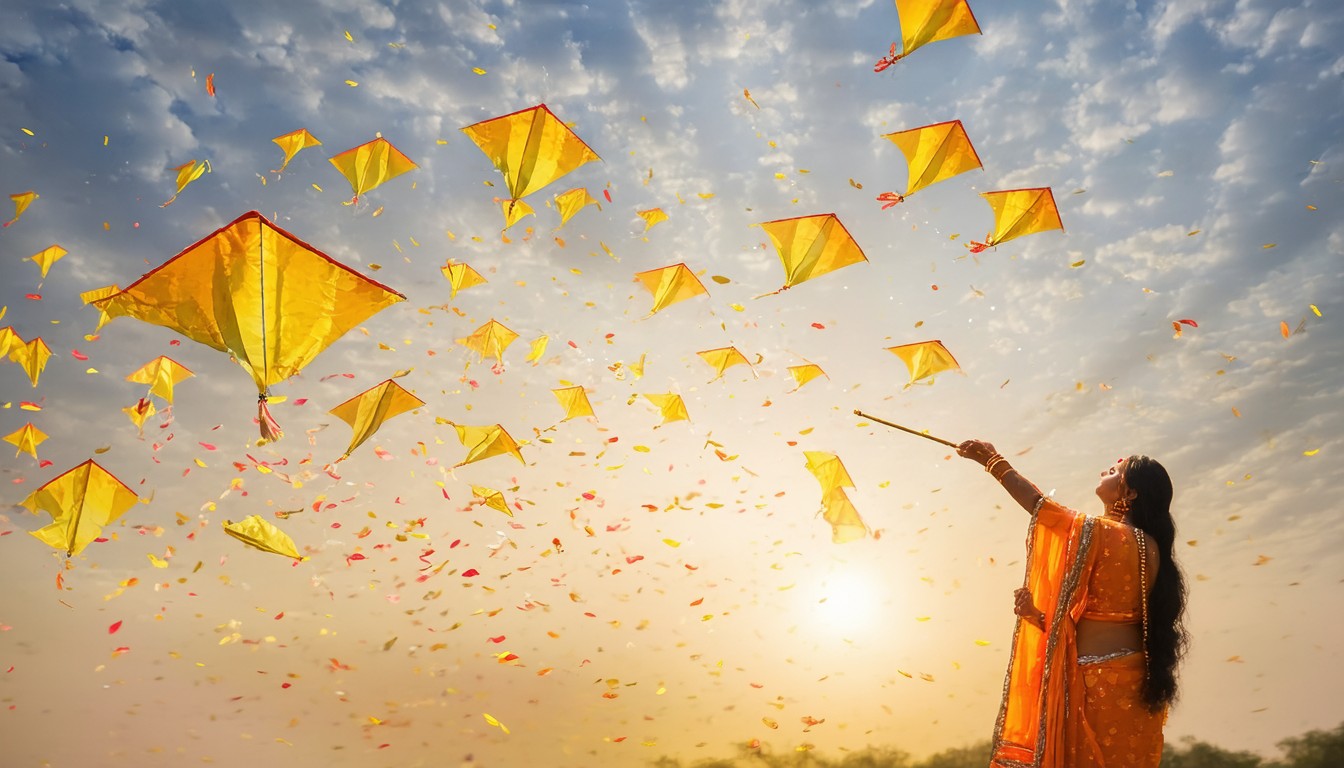
Different states infuse their own flavor into the celebrations. In Punjab, kites fill the skies while in West Bengal and Assam, grand community pujas gather crowds of worshippers. For many regions, Basant Panchami intersects with unique local customs—such as dhol performances and ritual harvest sowing in parts of rural Rajasthan and Haryana.
The Meaning Behind Yellow: Colors and Symbolism
Yellow’s prominence during Basant Panchami extends far beyond mere aesthetic appeal. The color denotes optimism, joyful energy, and the first blossoms of spring. Psychologically, yellow is also linked to intellect and clarity—themes perfectly resonant with the veneration of Saraswati. Fields of blooming mustard that blanket much of North India at this time further strengthen the sensory and emotional connection.
Scientific studies into color psychology have backed these traditional connotations, with researchers noting yellow’s ability to elevate mood and stimulate mental activity. This congruence between ancient traditions and modern findings highlights why yellow remains the festival’s central motif.
Educational and Social Impact
Basant Panchami has had a longstanding association with education. Schools and colleges across India, particularly in Bengal, mark the day with Saraswati Puja, processions, and art competitions. For many children, Basant Panchami is the auspicious occasion for ‘Aksharabhyasam’—the ritual of writing one’s first letters, symbolizing the formal initiation into the world of learning.
On a broader societal level, the festival fosters community ties, bridging age, class, and religious divides. Temples, public halls, and community centers become venues for cultural programs, music, and poetry recitals. Over recent years, the festival has also been leveraged by educational organizations and NGOs to promote literacy drives and skill development, echoing Saraswati’s message in real and impactful ways.
Contemporary Celebrations and Global Reach
While traditionally linked to India and Nepal, Basant Panchami has increasingly found resonance among the South Asian diaspora across Europe, North America, and Australia. Temples and cultural associations outside India organize pujas, music concerts, and food fairs, ensuring continuity of tradition far from native soil. The popularity of the festival’s aesthetic—yellow attire, floral motifs, and open-air gatherings—has even influenced public festivals and spring carnivals in multicultural cities.
Digital platforms now play a vital role. Social media amplifies the exchange of traditions, recipes, and cultural insights, connecting families and communities separated by thousands of miles. Online pujas and virtual Saraswati Vandanas witnessed significant engagement, especially during the recent pandemic-impacted years, and this hybrid model endures.
Unique Customs: Regional Stories and Evolving Practices
Each corner of India adds unique threads to the Basant Panchami tapestry. In Punjab, the festival dovetails with enthusiastic kite flying—a spectacle that has grown from humble beginnings into an anticipated regional competition. Meanwhile, in Odisha and Maharashtra, special temple rituals and processions bring together local folklore and mainstream Hindu practices.
In Assam and Bengal, the goddess is not just revered—she becomes almost a family member, adorned in new clothes, and venerated with the first fruits of the season. Sukriti Banerjee, a professor of anthropology, notes,
“The inclusivity of Basant Panchami is remarkable; it embraces region-specific rituals while upholding a unifying call for wisdom and joy.”
This flexibility and adaptability explain the festival’s sustained relevance and its seamless assimilation into diverse cultural contexts, both within the subcontinent and abroad.
Conclusion: The Enduring Power of Basant Panchami
Basant Panchami 2025 transcends its role as a religious festival, offering a joyful celebration of learning, creativity, and natural renewal. The focus on yellow—both color and crop—links the spiritual to the practical, while community rituals underline continuity and hope. As spring’s first major festival, Basant Panchami encourages collective optimism and reverence for knowledge, serving as an annual reminder of the enduring ties between tradition and progress.
FAQs
When is Basant Panchami in 2025?
Basant Panchami will be observed on February 2, 2025, according to the Hindu lunar calendar.
Why is Saraswati Puja important on Basant Panchami?
Saraswati Puja is central as the goddess symbolizes knowledge, creativity, and the arts, making her blessings especially sought after at the start of spring.
What foods are traditionally prepared for Basant Panchami?
Yellow-colored dishes like saffron rice, sweet boondi, and kesar halwa are commonly prepared, reflecting the color and spirit of the season.
Are there any regional differences in celebrating Basant Panchami?
Yes, practices vary—kite flying is prominent in Punjab, while elaborate Saraswati Pujas are organized in Bengal and Assam, showcasing regional diversity.
How has Basant Panchami adapted in diaspora communities?
South Asian communities abroad celebrate through temple gatherings, online pujas, and cultural events, blending tradition with modern technology.
Can non-Hindus participate in Basant Panchami celebrations?
Absolutely; the festival’s themes of spring, community, and the pursuit of learning are universal and often welcomed by diverse participants.















Leave a comment