

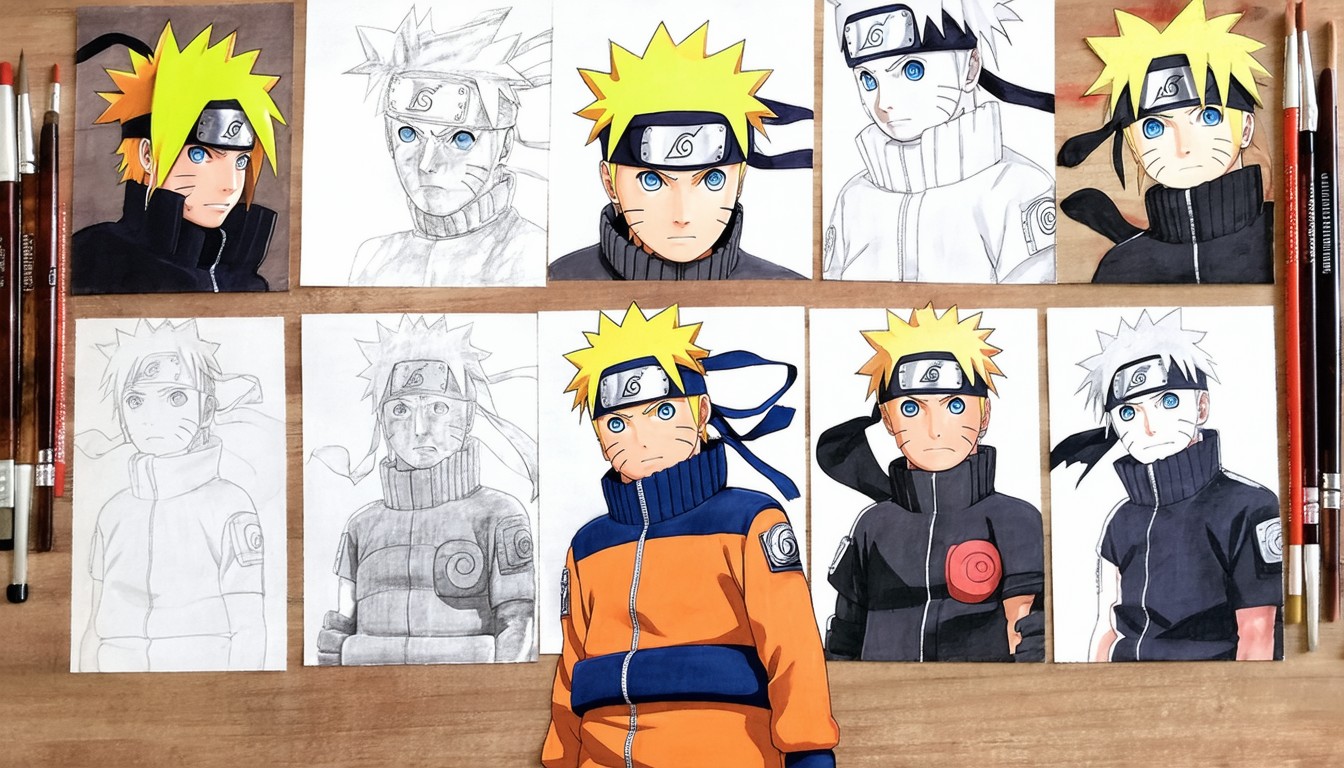
Naruto Uzumaki, the spirited ninja from Masashi Kishimoto’s manga and anime series, has become far more than a fictional character; he represents a worldwide cultural milestone. The act of creating a Naruto drawing is not just a hobby for fans—it’s a creative bridge to one of the most beloved stories in Japanese pop culture. Social media feeds and art platforms brim with fan art; search data indicates that “Naruto drawing” is among the most popular anime-themed art queries globally. For beginners, capturing Naruto’s signature spiky hair, ninja headband, and friendly-but-determined eyes can seem daunting, but a step-by-step approach makes it accessible.
Tools and Materials: Setting Up for Success
Before embarking on your Naruto drawing, assembling the right tools can make the experience smoother and the results neater. Many professional artists recommend starting simply:
- Pencils: HB or 2B for initial sketching
- Eraser: A kneaded or soft eraser for gentle corrections
- Paper: Smooth sketch or drawing paper
- Fineliner or ink pen: For outlining
- Colored pencils or markers: Optional, for bringing Naruto to life
Digital artists can use graphics tablets and software like Procreate or Adobe Fresco, which imitate traditional techniques with the added benefit of layers and undo tools. As Kei Aoyama, a character design instructor, notes:
“Fundamental drawing skills—observation, construction, and patience—matter far more than having premium materials.”
Understanding Naruto’s Character Design
Anatomy of Naruto: Key Visual Elements
Naruto’s appeal comes from both his personality and iconic design. There are visual motifs even total beginners can capture, including:
- Hair: Spiky, sun-colored, with motion suggesting energy
- Forehead Protector: Leaf symbol, marks him as part of Konohagakure
- Eyes: Large, expressive, rounded features signify youth
- Whisker Marks: Three on each cheek, unique to Naruto
In practice, these features can be simplified into basic shapes—hair as jagged triangles, eyes as large circles, headband as a banded rectangle—then refined as confidence grows. Many drawing tutorials start with these simple shapes and build up detail in layers.
Studying Reference Images
A quick scan of high-performing art accounts on Instagram or DeviantArt reveals a common workflow: artists collect reference images, trace the basic pose, and vary expressions or clothing. This method encourages observation and insight into the anatomy of anime figures.
Step-by-Step Guide: Drawing Naruto for Beginners
1. Sketching the Base Head Shape
Begin with a light circle for the skull and a vertical guideline for facial symmetry. Add a horizontal line one-third down for the eye placement.
2. Outlining the Jaw and Chin
Use gentle lines to connect the sides of the circle into Naruto’s slightly pointed chin. This gives his face its youthful, recognizable shape.
3. Placing Facial Features
Mark a horizontal guideline below the eye line for the nose. Naruto’s eyes are wide-set and slightly tilted upwards at the outer corners—a classic anime style.
- Eyes: Sketch two wide ovals, spacing them evenly.
- Nose: A small, subtle line or dot.
- Mouth: A gently smiling curve, often suggesting mischief.
4. Drawing Hair and Headband
Add jagged hair spikes, noting the way they burst outwards from the headband. The headband itself wraps horizontally around the forehead, with a plate in front. Lightly sketch the leaf symbol in the middle.
5. Finalizing Features and Details
Draw the three whisker marks on each cheek. Add eyebrows above the eyes, keeping them expressive. Once satisfied, carefully outline with a fineliner or digital inking brush.
6. Adding Color and Shading (Optional)
Use colored pencils or digital tools to add bright yellows for hair, orange for the jumpsuit, and subtle shading on the skin. Many tutorials recommend building color in layers for depth.
“Start with bold, simple shapes; every great anime character starts as an uncomplicated silhouette. Refining comes in layers.” – Anime Art Magazine
7. Refining and Correcting
Carefully erase construction lines, review proportions, and adjust areas that look off. Even professionals revise their artwork several times, emphasizing the importance of patience.
Real-World Inspiration: Community and Growth
Platforms like TikTok, YouTube, and Reddit’s r/AnimeArt have given rise to a new generation of artists tackling Naruto drawing challenges, often sharing “draw this in your style” versions. Tutorials rack up millions of views, indicating massive interest and communal encouragement for beginners at every skill level.
For example, illustrator Yoko Okumura’s month-long “Naruto Drawing Series” on YouTube attracted thousands of comments from fans, many of whom posted their progress and received actionable feedback. The approachable step-by-step style has proven especially popular with young learners and hobbyists.
Troubleshooting Common Beginner Issues
Even with guides, beginners face several hurdles:
- Proportions feel off: Always measure using guidelines and adjust symmetry.
- Stiff poses: Start with basic gesture lines to map out flow before adding detail.
- Hair looks flat: Vary spike direction and add shading along the roots.
Seeking feedback from online communities or comparing reference images alleviates many common problems. Persistence and iteration lead to improvement, as echoed by experienced creators.
“The key to mastering Naruto drawing—or any character—is repetition and resilience. Don’t hesitate to redraw tough sections; each attempt sharpens your eye.” – Shunichi Saito, professional manga artist
Taking the Next Step: Personalizing Your Naruto Drawings
Once confident with the basics, aspiring artists often experiment by:
- Changing Naruto’s outfit to alternate series arcs
- Adjusting facial expressions for different emotions
- Drawing Naruto alongside other characters for comparison and storytelling
Art challenges such as “Naruto fan art week” encourage this creative exploration while reinforcing foundational skills.
Conclusion: Creativity and Community Drive Growth
Naruto drawing offers a direct path to both artistic skill improvement and participation in a passionate global community. With step-by-step practice, keen observation, and the willingness to refine, even beginners can achieve impressive results. The consistent popularity of Naruto-themed fan art highlights not just the strength of the anime’s legacy, but also how accessible character drawing can serve as a gateway to broader creative journeys. For those just starting out, every sketch is both a learning experience and a contribution to a vibrant, interconnected fan culture.
FAQs
How do I draw Naruto if I’m a complete beginner?
Start by breaking down his features into simple shapes—circles for the head, ovals for eyes, triangles for hair spikes. Follow step-by-step guides and use plenty of reference images for accuracy.
What is the easiest way to sketch Naruto’s signature hair?
Map out the general outline with light pencil strokes, focusing on uneven, jagged triangles radiating from the headband. Don’t worry about perfect symmetry; Naruto’s hair looks most authentic with a sense of movement.
Which materials should I use as a beginner?
Affordable graphite pencils (HB or 2B), plain drawing paper, and a soft eraser are more than enough to start. Fineliners and colored pencils help finish the drawing, but digital alternatives also work.
How can I improve my Naruto drawings over time?
Practice regularly and don’t shy away from studying reference images or redrawing completed works. Joining online art communities can provide feedback, motivation, and ideas for new challenges.
Why are Naruto drawings so popular with fans?
Naruto’s distinctive look and wide emotional range make him a favorite subject for creative interpretation. Fan art is also a way for enthusiasts to celebrate the series and engage with others who share their passion.
Are there any online resources or communities for Naruto drawing?
Yes—platforms like YouTube, Instagram, DeviantArt, and Reddit feature a wealth of tutorials, art challenges, and support groups where beginners can share their work and gain inspiration from fellow fans.















Leave a comment