

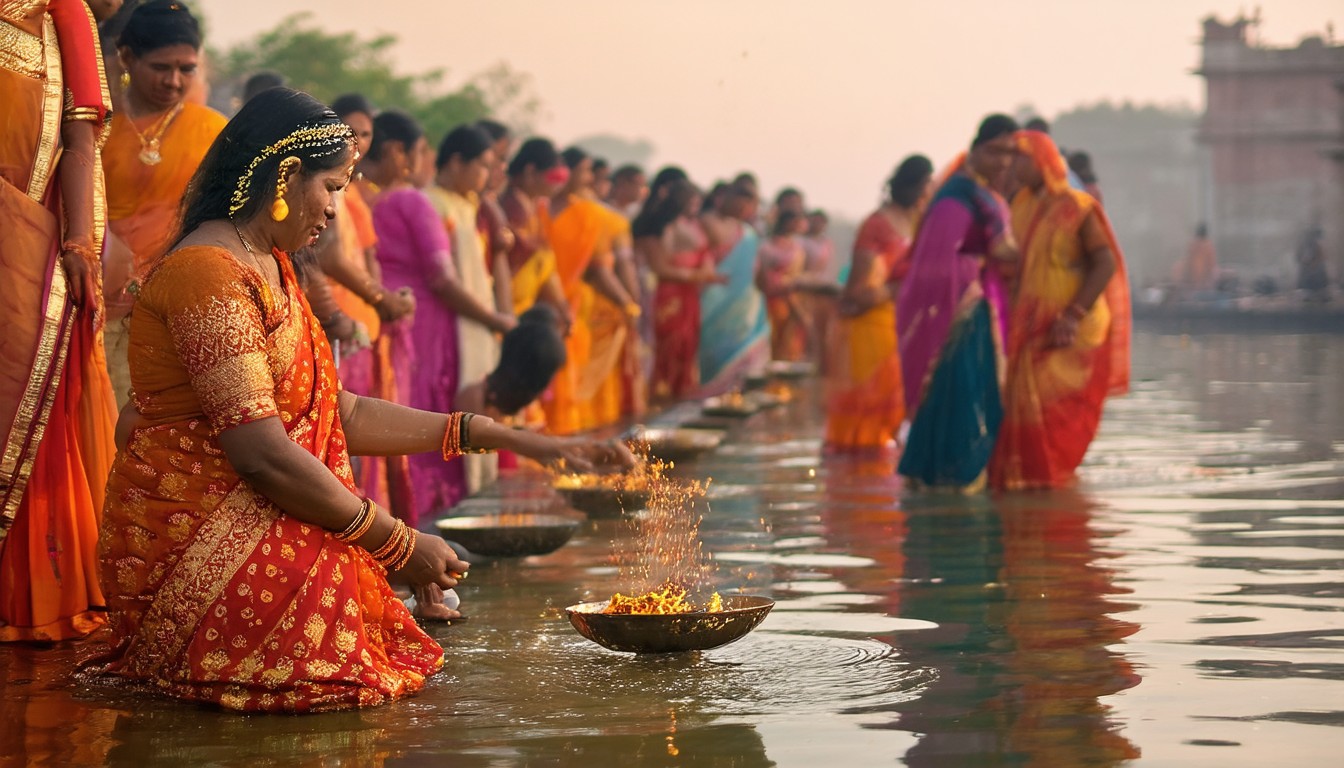
Chhath Puja, an ancient Hindu festival dedicated to the worship of the Sun God (Surya) and his sister Chhathi Maiya, holds profound spiritual, cultural, and ecological significance for millions, especially across the Indian states of Bihar, Uttar Pradesh, Jharkhand, and parts of Nepal. As devotees prepare for Chhath Puja 2025, the festival continues to evolve, transcending regional boundaries while retaining its core traditions and symbolic depth. More than just a religious observance, Chhath underscores the intrinsic connection between society, environment, and the cyclical rhythms of nature.
The Spiritual Significance of Chhath Puja
Marked by an intense devotion, Chhath Puja is unique in its veneration of the Sun as the source of all life and vitality. It is believed that honoring Surya and Chhathi Maiya ensures health, prosperity, and the well-being of one’s family. Unlike other Hindu festivals, Chhath is notable for its strict rituals that involve fasting, riverside offerings, and disciplined physical purity.
The festival stands out for its inclusivity. Caste distinctions become irrelevant as communities—urban and rural alike—gather along riverbanks, united by collective purpose and tradition.
“Chhath is not just a festival—it’s an environmental campaign anchored in faith, where devotion and ecological awareness merge seamlessly,” says Dr. Aaradhya Singh, a cultural anthropologist specializing in South Asian traditions.
Rituals and Practices: A Four-Day Journey
Chhath Puja 2025 is expected to follow traditional observances, typically spanning four days, each marked by its own set of rituals:
Day 1: Nahay Khay – The Cleanse
Devotees begin with Nahay Khay, a cleansing ritual reflecting physical and spiritual purification. Houses are meticulously cleaned, and participants bathe in rivers or ponds before preparing a simple meal, usually of rice, pumpkin, and lentils cooked in earthen or brass utensils.
Day 2: Kharna – Fasting and Preparation
On the second day, known as Kharna, observers undertake a strict fast without water, broken only after sunset with a meal usually consisting of jaggery-laden kheer (rice pudding) and chapati. This meal, prepared with the utmost purity, is shared with family and sometimes neighbors, reinforcing communal bonds.
Day 3: Sandhya Arghya – Evening Offerings
On the most visually evocative day, devotees gather at water bodies, often accompanied by folk songs and traditional music, to offer ‘arghya’ (oblations) to the setting sun. Women carry baskets filled with fruits, thekua (a wheat-based sweet), and other offerings. The sense of unity and humility is palpable as participants stand waist-deep in water, prayers echoing in the twilight.
Day 4: Usha Arghya – Morning Offerings
The conclusion of Chhath Puja sees devotees returning to the riverbank before dawn to offer their final prayers to the rising sun. This ritual signifies gratitude for new beginnings and the cyclical nature of life, emphasizing renewal and hope for the future.
Origins and Historical Context
Celebrated since Vedic times, Chhath Puja is referenced in ancient scriptures such as the Rig Veda, where rituals honoring the Sun God for health and longevity are described. The festival’s roots are often linked to the epic Ramayana and Mahabharata—stories suggest Sita and Draupadi both observed similar solar rituals seeking blessings.
In contemporary times, Chhath Puja has witnessed a revival, particularly among urban diasporas, who view the festival as not only a religious duty but a means of reclaiming cultural identity amidst rapid modernization.
Environmental and Social Dimensions
Beyond its spiritual essence, Chhath Puja is widely perceived as a festival fostering ecological stewardship. The focus on rivers and natural water sources draws attention to environmental conservation, sometimes leading to collective clean-up drives before the celebrations. In major cities like Patna, Delhi, and Mumbai, initiatives led by both local governments and volunteer organizations aim to ensure that immersion sites are kept clean and safe.
Chhath also promotes social equality—a rare phenomenon in festival settings. Everyone, irrespective of socioeconomic status, shares the same space, food, and rituals. This convergence acts as a powerful reminder of social solidarity, especially in times of social fragmentation.
Unique Traditions and Regional Variations
While the core rituals of Chhath Puja remain constant, numerous regional variations imbue the festival with local flavor:
-
Bamboo Soop and Daura: Devotees use bamboo baskets to carry offerings, emphasizing sustainable and natural materials.
-
Thekua and Kasar: These sweets, prepared in every household, serve as signature festive treats and are distributed among friends and family.
-
Folk Songs and Dances: Traditional Chhath geet (songs) recount the mythology and communal values of the festival, fostering intergenerational bonding.
In states such as Jharkhand and regions of Nepal, Chhath integrates local music, dance, and culinary elements, further diversifying the cultural expanse of the festival.
Chhath Puja 2025: Celebrations in Urban India and Abroad
Indian cities are witnessing a renewed passion for Chhath Puja, with migrant communities transforming public spaces—parks, artificial ponds, even rooftop terraces—into makeshift ghats for rituals. The festival’s globalization is evident as vibrant celebrations now occur in New York, London, and Sydney, where Indian expatriates maintain tradition, adapting to local contexts yet preserving authenticity.
Innovative eco-friendly approaches are increasingly visible, with organizers replacing plastic items with clay lamps and biodegradable plates. State authorities in Bihar and Uttar Pradesh provide logistical support, from crowd management to medical tents, underscoring the festival’s large-scale impact.
The Role of Women and Family in Chhath Puja
Traditionally, women—particularly mothers—lead the rites, performing strenuous fasts and penances for the family’s health and prosperity. However, in recent years, more men have begun participating, signaling an evolving, more inclusive spirit.
Intergenerational participation is vital to Chhath’s continuity. Many families narrate stories of how their grandmothers taught them chants and ritual processes, ensuring the festival’s transmission from one generation to the next. The hands-on involvement of youth is now crucial, especially as urban lifestyles challenge the sustainability of such age-old traditions.
Health, Safety, and Contemporary Challenges
The large public gatherings and immersion rituals present safety and health considerations. Authorities regularly remind participants regarding water safety, food hygiene, and crowd management—key concerns in dense urban centers. Notably, Chhath Puja’s inherently vegetarian, natural diets and disciplined routines receive praise from health professionals for promoting physical and mental well-being.
Urbanization, river pollution, and space constraints pose challenges, requiring community collaboration and innovation to uphold the sanctity of rituals without compromising environmental ethics.
Conclusion: Chhath Puja’s Enduring Relevance
Chhath Puja 2025 is more than a fleeting observance—it embodies values of gratitude, discipline, inclusion, and environmental awareness that resonate across generations and geographies. As devotees across the world prepare to greet the Sun God and Chhathi Maiya, the festival remains a testimony to the timeless link between humanity, nature, and the quest for collective well-being.
FAQs
When will Chhath Puja 2025 be celebrated?
Chhath Puja 2025 is expected to fall in late October or early November, following the Hindu lunar calendar, with exact dates determined by the appearance of the sixth day of Kartik month.
Why is the festival dedicated to the Sun God?
Surya, the Sun God, is revered as the source of all life and energy, making him central to Chhath Puja’s rituals and prayers for health, prosperity, and renewal.
What are the main food offerings during Chhath Puja?
Signature offerings include thekua (a wheat-based sweet), seasonal fruits, and kheer (sweet rice pudding), all prepared without onion, garlic, or commercial additives.
How is Chhath Puja practiced in urban areas?
Urban observances often utilize artificial ponds, community parks, or rooftops for rituals, with community groups and local authorities facilitating festivities in safe and eco-friendly ways.
Can non-Hindus or people from other regions participate?
Chhath Puja is widely celebrated for its inclusivity; all individuals, regardless of caste, creed, or religion, are welcome to observe or participate in the festival’s community rituals.














Leave a comment